Author name: Khalid KHALID

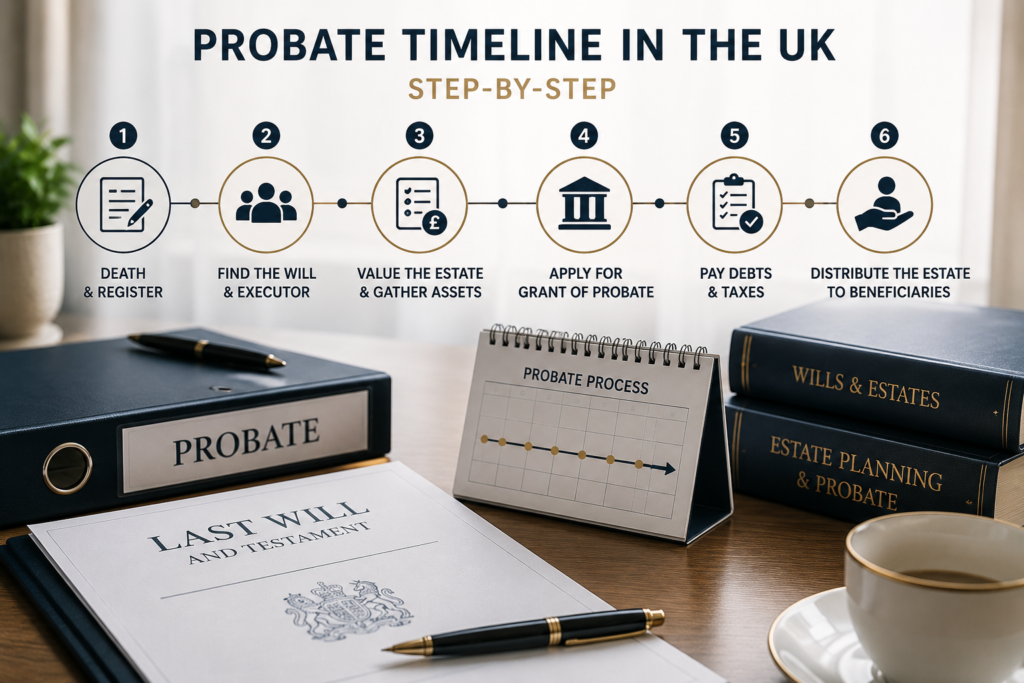
Probate Timeline in the UK: Step-by-Step

Probate is the legal process of managing a person’s estate after they die. It involves collecting assets, paying debts, and distributing inheritance to beneficiaries. Many people find probate confusing and stressful, especially during a difficult emotional period. Understanding the probate timeline can help families know what to expect and avoid unnecessary delays.

The first step is registering the death. This is usually done within five days in England and Wales. Once the death is registered, the family receives the death certificate, which is required for financial and legal matters. At this stage, relatives often begin locating the will and identifying the executors responsible for administering the estate.

If there is a valid will, the named executors apply for a Grant of Probate. If there is no will, close relatives apply for Letters of Administration instead. Both documents give legal authority to manage the estate. Before applying, the value of the estate must be calculated, including property, savings, investments, and personal possessions.

Inheritance tax may also need to be assessed and, in some cases, partially paid before probate is granted. Even if no tax is due, forms usually need to be submitted to HM Revenue and Customs. This stage can take several weeks, especially if the estate is complex or property valuations are required.

Once the application is submitted, the Probate Registry reviews the documents. Straightforward applications may be approved within a few weeks, but delays are common if information is missing or the estate is disputed. After probate is granted, executors can begin collecting assets from banks, investment providers, and other institutions.

The next step is paying outstanding debts and liabilities. This may include funeral costs, utility bills, loans, or taxes. Executors must ensure all debts are settled before distributing inheritance to beneficiaries. They may also place notices in newspapers to protect themselves from unknown creditors.

After debts are cleared, the remaining estate can be distributed according to the will or intestacy rules if no will exists. Beneficiaries may receive money, property, or personal items. Executors should keep detailed records of all financial transactions during the process.

Simple estates may be completed within six to nine months, while more complicated cases involving property sales, inheritance disputes, or foreign assets can take a year or longer. Delays often occur when paperwork is incomplete or family disagreements arise.

Professional legal support can make probate easier and reduce stress for executors. Solicitors can help with tax forms, property transfers, and legal requirements while ensuring the estate is handled correctly.

Understanding the probate timeline helps families prepare for the process and manage expectations. Although probate can take time, careful organisation and proper legal guidance can help ensure the estate is administered smoothly and fairly.

Probate Timeline in the UK: Step-by-Step Read More »

How to Handle Digital Assets in Your Will

Digital assets have become an important part of modern life, yet many people overlook them when preparing a will. Online accounts, digital currencies, social media profiles, and cloud storage can all hold financial or sentimental value. Including digital assets in your estate planning helps ensure they are managed properly after death.

Digital assets cover a wide range of items. These may include email accounts, online banking, cryptocurrencies, photographs stored in the cloud, websites, domain names, digital businesses, and social media accounts. Subscription services, loyalty points, and online payment accounts may also form part of your digital estate.

One of the biggest challenges is that family members may not know what digital assets exist or how to access them. Password protection and privacy laws can make it difficult for executors to retrieve important information. Without proper planning, valuable accounts or digital property may be lost permanently.

A good starting point is creating a secure inventory of digital assets. This should include account details, usernames, passwords, and instructions for access. However, passwords should not usually be written directly into a will because wills become public documents after probate. Instead, many people store this information securely in a password manager or separate confidential document.

You should also clearly state in your will who is responsible for handling digital assets. Some individuals appoint a specific digital executor to manage online accounts, close social media profiles, or transfer digital property to beneficiaries. This can help reduce confusion and ensure your wishes are followed.

Cryptocurrency requires special attention because access depends entirely on private keys and recovery phrases. If this information is lost, the assets may become inaccessible forever. Proper storage and clear instructions are essential.

Many online platforms now offer legacy contact or memorialisation options. For example, social media platforms may allow accounts to be deleted, memorialised, or managed by a trusted person after death. Reviewing these settings can help ensure your digital presence is handled appropriately.

Professional legal advice can also be useful, especially for individuals with valuable online businesses, intellectual property, or cryptocurrency investments. Laws regarding digital assets continue to evolve, and proper planning can prevent unnecessary complications.

Digital assets are now an important part of estate planning. Including them in your will helps protect valuable information, reduce stress for loved ones, and ensure your online legacy is managed according to your wishes.

How to Handle Digital Assets in Your Will Read More »

The Importance of Updating Your Will After Life Events

Creating a will is one of the most important steps in protecting your family and assets, but many people forget that a will should not remain unchanged forever. Major life events can significantly affect your financial situation, relationships, and personal wishes. Failing to update your will after these events may result in unintended consequences for your loved ones.

Marriage is one of the most common reasons to review a will. In the UK, marriage generally revokes an existing will unless it was specifically made in contemplation of that marriage. This means your previous wishes may no longer be legally valid. Divorce is equally important. Although divorce does not completely invalidate a will, it can affect provisions involving a former spouse and create confusion if changes are not made promptly.

The birth or adoption of children is another key reason to update your will. Parents often wish to appoint guardians, create trusts, or ensure children are financially protected if something happens to them. Without clear instructions, decisions about guardianship and inheritance may become complicated and stressful for surviving family members.

Financial changes should also trigger a review. Purchasing property, starting a business, receiving an inheritance, or acquiring valuable investments can all impact how your estate should be distributed. A will written many years ago may no longer reflect your current assets or intentions.

Changes in relationships may also affect your wishes. You may want to include stepchildren, grandchildren, close friends, or charities that were not part of your life previously. Likewise, if an executor or beneficiary dies, your will should be updated to avoid legal complications.

Updating a will does not always require creating a completely new document. Minor changes can sometimes be made through a codicil, which is a legal amendment attached to the original will. However, major changes are often better handled by preparing a new will entirely.

Regularly reviewing your will helps ensure your wishes remain accurate, legally valid, and easy for loved ones to follow. Many solicitors recommend reviewing a will every three to five years or after any significant life event. Keeping your will up to date provides peace of mind and reduces the risk of family disputes in the future.

The Importance of Updating Your Will After Life Events Read More »

DIY Will Kits vs Solicitor-Written Wills: Pros and Cons

Making a will is essential for protecting your estate and ensuring your wishes are followed after death. Many people choose between using a DIY will kit or hiring a solicitor to prepare the document. Both options have advantages and disadvantages, depending on the complexity of your situation.

DIY will kits are popular because they are affordable and convenient. They are available online, in stationery shops, and through various legal websites. For individuals with simple estates, few assets, and straightforward wishes, a DIY will can seem like a practical solution. It allows people to complete the process quickly without paying professional legal fees.

Another advantage of DIY wills is flexibility. You can complete the document at your own pace and make basic changes when needed. Some online services also provide templates and guidance to help users avoid simple mistakes.

However, DIY wills also carry risks. Wills must follow strict legal requirements to be valid in the UK. Errors in wording, signing, or witnessing can make the will invalid or create uncertainty after death. Ambiguous language may lead to family disputes, delays in probate, or costly court proceedings.

DIY wills may also fail to address complex legal issues such as inheritance tax planning, business ownership, overseas assets, trusts, or blended family arrangements. People often underestimate how complicated estate planning can become. A poorly drafted will may unintentionally leave beneficiaries without proper protection.

Solicitor-written wills offer professional expertise and legal accuracy. A solicitor can assess your personal circumstances, explain your options, and ensure the will reflects your wishes clearly. This is especially important for individuals with significant assets, children from multiple relationships, vulnerable beneficiaries, or business interests.

Solicitors can also help minimise inheritance tax and reduce the likelihood of disputes. Their advice can provide reassurance that the will complies with current legal requirements. In many cases, the long-term benefits outweigh the initial cost.

The main disadvantage of solicitor-written wills is expense. Professional legal services cost more than DIY kits, which may discourage some people. However, correcting mistakes after death can be far more expensive for surviving family members.

Ultimately, the right option depends on your circumstances. Simple estates may be suitable for DIY wills, but more complicated situations usually benefit from professional legal advice. A valid and carefully prepared will can save loved ones time, stress, and unnecessary legal problems in the future.

DIY Will Kits vs Solicitor-Written Wills: Pros and Cons Read More »