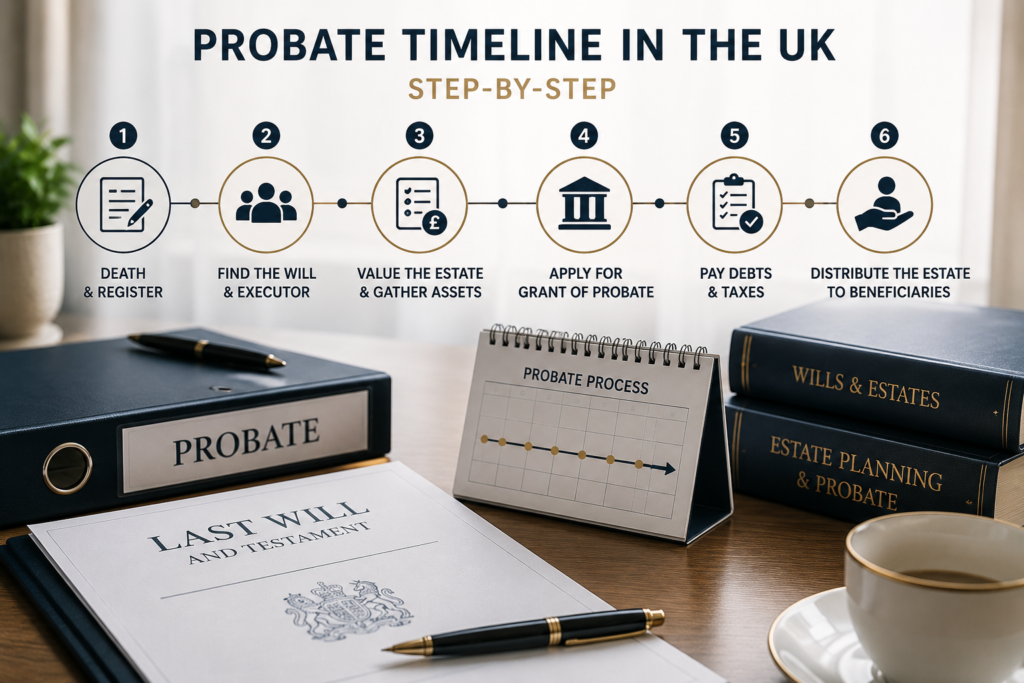
Probate Timeline in the UK: Step-by-Step
Probate is the legal process of managing a person’s estate after they die. It involves collecting assets, paying debts, and distributing inheritance to beneficiaries. Many people find probate confusing and stressful, especially during a difficult emotional period. Understanding the probate timeline can help families know what to expect and avoid unnecessary delays.
The first step is registering the death. This is usually done within five days in England and Wales. Once the death is registered, the family receives the death certificate, which is required for financial and legal matters. At this stage, relatives often begin locating the will and identifying the executors responsible for administering the estate.
If there is a valid will, the named executors apply for a Grant of Probate. If there is no will, close relatives apply for Letters of Administration instead. Both documents give legal authority to manage the estate. Before applying, the value of the estate must be calculated, including property, savings, investments, and personal possessions.
Inheritance tax may also need to be assessed and, in some cases, partially paid before probate is granted. Even if no tax is due, forms usually need to be submitted to HM Revenue and Customs. This stage can take several weeks, especially if the estate is complex or property valuations are required.
Once the application is submitted, the Probate Registry reviews the documents. Straightforward applications may be approved within a few weeks, but delays are common if information is missing or the estate is disputed. After probate is granted, executors can begin collecting assets from banks, investment providers, and other institutions.
The next step is paying outstanding debts and liabilities. This may include funeral costs, utility bills, loans, or taxes. Executors must ensure all debts are settled before distributing inheritance to beneficiaries. They may also place notices in newspapers to protect themselves from unknown creditors.
After debts are cleared, the remaining estate can be distributed according to the will or intestacy rules if no will exists. Beneficiaries may receive money, property, or personal items. Executors should keep detailed records of all financial transactions during the process.
Simple estates may be completed within six to nine months, while more complicated cases involving property sales, inheritance disputes, or foreign assets can take a year or longer. Delays often occur when paperwork is incomplete or family disagreements arise.
Professional legal support can make probate easier and reduce stress for executors. Solicitors can help with tax forms, property transfers, and legal requirements while ensuring the estate is handled correctly.
Understanding the probate timeline helps families prepare for the process and manage expectations. Although probate can take time, careful organisation and proper legal guidance can help ensure the estate is administered smoothly and fairly.
Probate Timeline in the UK: Step-by-Step Read More »