
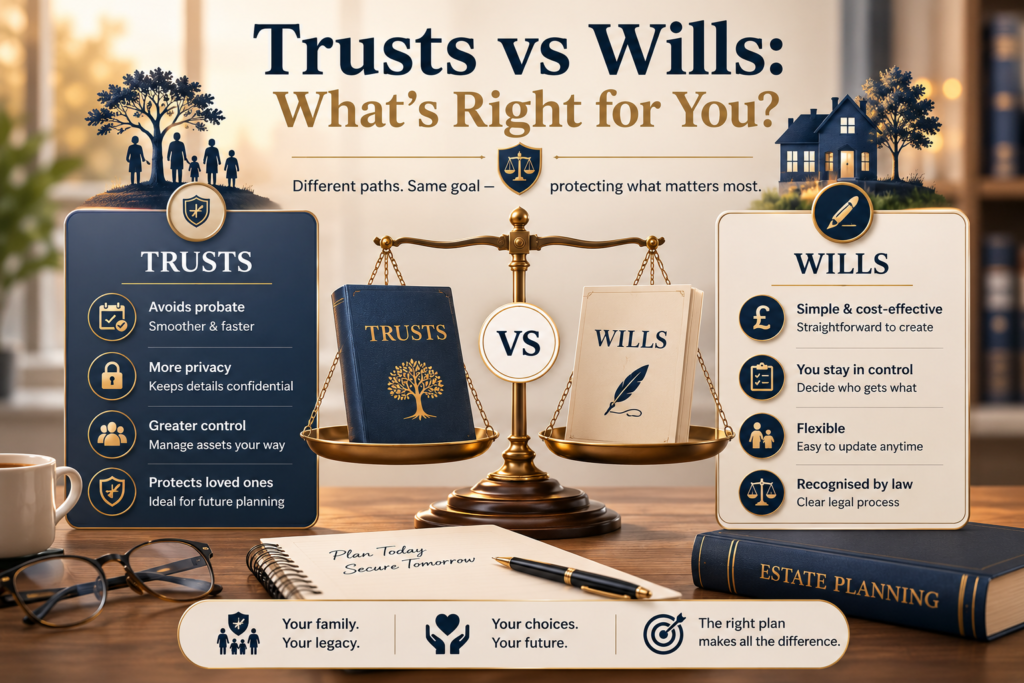
Wills and trusts are both important estate planning tools, but they serve different purposes. Understanding how they work can help individuals decide which option best suits their financial situation, family structure, and long-term goals.
A will is a legal document that explains how a person’s assets should be distributed after death. It can also appoint executors, name guardians for children, and express funeral wishes. Wills are generally straightforward and suitable for many people with simple estates.
One advantage of a will is simplicity. It allows individuals to clearly state who should inherit money, property, and possessions. Wills can also help reduce uncertainty for family members and ensure assets are distributed according to personal wishes rather than intestacy rules.
However, wills only take effect after death and usually require probate before assets can be distributed. Probate can take time and may become public record. In some situations, wills alone may not provide enough protection for vulnerable beneficiaries or complex family arrangements.
A trust is a legal arrangement where assets are managed by trustees for the benefit of beneficiaries. Trusts can operate during a person’s lifetime, after death, or both. They are often used for tax planning, asset protection, or managing inheritance for children or vulnerable individuals.
One major advantage of trusts is control. A trust can specify how and when beneficiaries receive assets rather than giving inheritance outright. This may protect young beneficiaries from mismanaging money or help safeguard assets during divorce or financial difficulties.
Trusts may also help reduce inheritance tax in certain situations, although tax rules can be complex and professional advice is essential. Some trusts allow assets to pass outside probate, which can speed up administration and provide greater privacy.
However, trusts are generally more complicated and expensive to establish than wills. Trustees have legal duties and ongoing administrative responsibilities. Inappropriate use of trusts may create unnecessary costs or tax consequences.
For many people, a combination of both a will and a trust provides the best solution. A will can distribute assets generally, while trusts address specific concerns such as protecting children, caring for vulnerable beneficiaries, or preserving family wealth.
The right choice depends on individual circumstances. Factors such as family structure, property ownership, business interests, and tax planning goals all influence estate planning decisions. Professional legal advice can help determine the most suitable approach.
Effective estate planning provides peace of mind and financial protection for loved ones. Whether using a will, a trust, or both, careful planning ensures personal wishes are respected and future legal complications are reduced.