
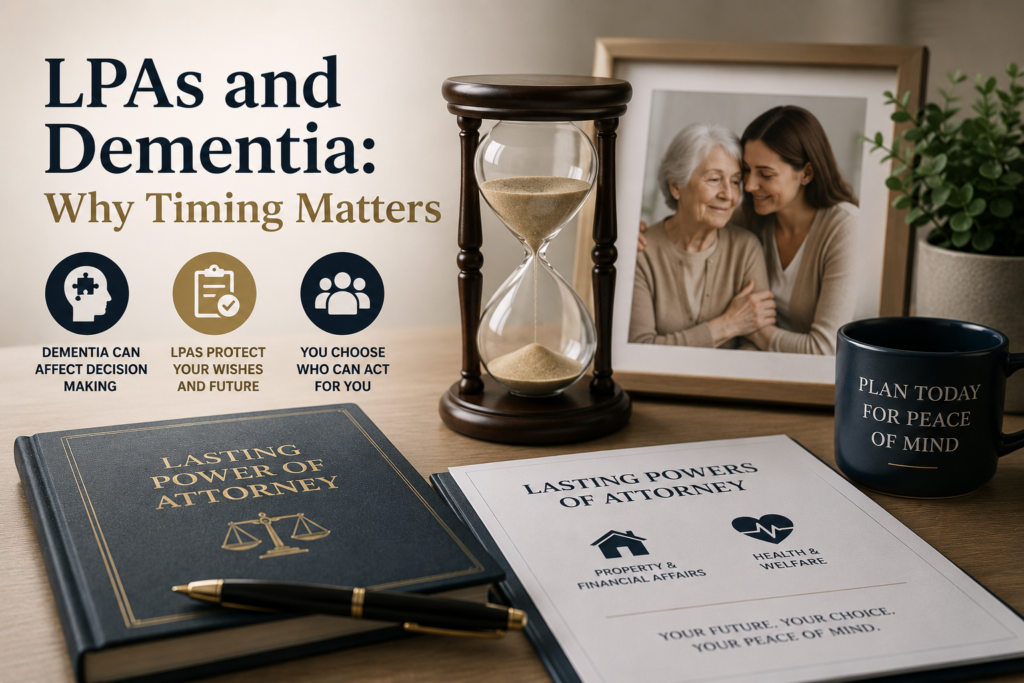
A Lasting Power of Attorney (LPA) is a legal document that allows someone to make decisions on your behalf if you lose the ability to do so yourself. LPAs are particularly important when planning for conditions such as dementia, where mental capacity may gradually decline over time. Acting early is essential because once capacity is lost, creating an LPA may no longer be possible.
There are two main types of LPA in England and Wales. A Property and Financial Affairs LPA allows someone to manage bank accounts, pay bills, sell property, and handle financial matters. A Health and Welfare LPA covers decisions about medical treatment, care arrangements, and daily wellbeing.
Dementia can develop slowly, and many people delay discussing legal planning because it feels uncomfortable or unnecessary. However, waiting too long can create serious difficulties for family members later. To create a valid LPA, the individual must understand the nature and consequences of the document at the time it is signed. If they no longer have mental capacity, the LPA cannot legally be completed.
Without an LPA, relatives do not automatically gain authority to manage finances or make healthcare decisions. Families may need to apply to the Court of Protection for a deputyship order instead. This process is often expensive, time-consuming, and more restrictive than an LPA.
Creating an LPA early gives individuals control over who will make decisions on their behalf. They can choose trusted family members, friends, or professionals and provide guidance about how decisions should be made. This can reduce stress and conflict during difficult times.
An LPA also provides practical benefits. Attorneys can help manage bills, pensions, and care arrangements if the person begins struggling with daily tasks. Early planning can prevent financial problems and ensure medical decisions reflect the individual’s preferences.
Some people worry that granting an LPA means losing independence immediately, but this is not the case. A person can still manage their own affairs while they have mental capacity. The attorney only acts when needed or when permission is given.
Dementia affects not only the individual but also their family and carers. Having an LPA in place can provide reassurance that legal authority exists to make important decisions quickly and efficiently.
Solicitors can help prepare LPAs correctly and ensure all legal requirements are met. Professional advice is particularly useful when there are complex family situations or concerns about future care planning.
Planning early is one of the most important steps anyone can take when facing the possibility of dementia. A properly prepared LPA helps protect personal wishes, reduces legal complications, and provides peace of mind for everyone involved.