
Understanding Lasting Power of Attorney (LPA)
A Lasting power of attorney (LPA) is a legal document that enables a trusted person to make decisions on your behalf if you become unable to make those decisions yourself in the future.
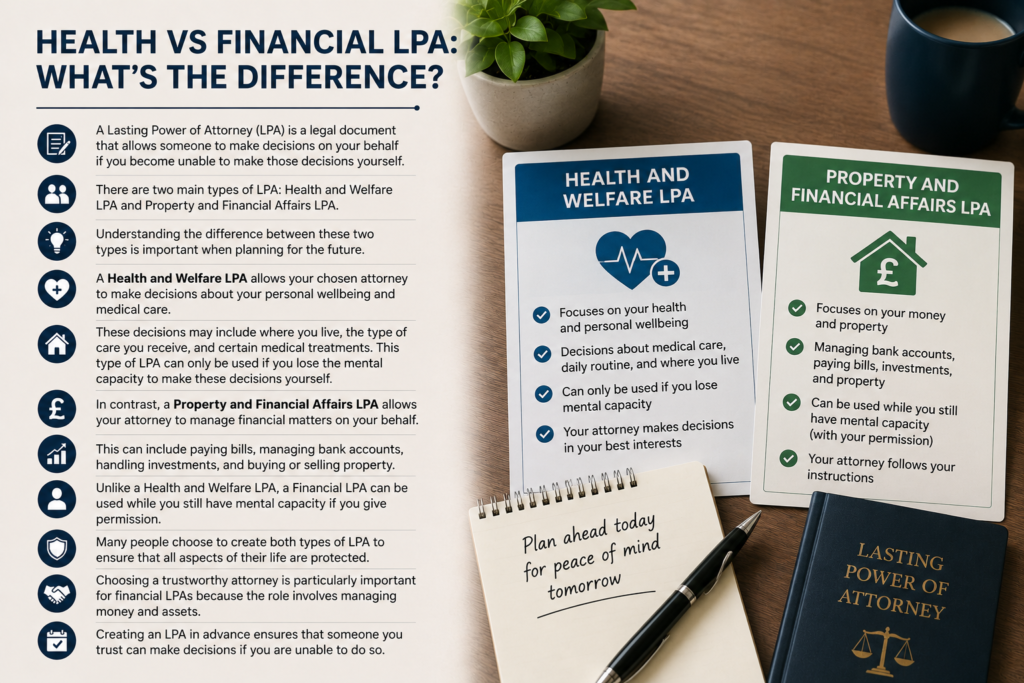
There are two types of LPA, each covering different areas of your life:
- Health and Welfare LPA
- Property and Financial Affairs LPA
Understanding the purpose of each can help you make informed decisions when planning for the future.
Health and Welfare LPA
A Health and Welfare Lasting Power of Attorney allows your chosen attorney to make decisions about your personal wellbeing if you lose the mental capacity to do so yourself.
These decisions may include:
- Medical treatment and healthcare choices
- Daily care and support arrangements
- Where you live and receive care
- Decisions relating to personal welfare
This type of LPA only becomes effective when you are no longer able to make these decisions independently.
Property and Financial Affairs LPA
A Property and Financial Affairs Lasting Power of Attorney allows your attorney to manage your financial matters and assets on your behalf.
Responsibilities may include:
- Managing bank and savings accounts
- Paying bills and household expenses
- Handling investments and pensions
- Buying, selling, or managing property
Unlike a Health and Welfare LPA, this type of LPA can be used while you still have mental capacity, provided you have given your attorney permission to act.
Should You Have Both Types of LPA?
Many people choose to create both types of Lasting Power of Attorney to ensure that every aspect of their personal and financial affairs is protected. Having both documents in place provides reassurance that trusted individuals can make important decisions when needed.
Choosing the Right Attorney
Selecting an attorney is one of the most important decisions when creating an LPA.
Your chosen attorney should be someone who is:
- Trustworthy and reliable
- Capable of making responsible decisions
- Willing to act in your best interests
This is particularly important for a Property and Financial Affairs LPA, where the attorney may be responsible for managing significant financial assets.
Planning Ahead for Peace of Mind
Creating a Lasting Power of Attorney allows you to plan ahead and maintain control over who will make decisions on your behalf if circumstances change. By putting the right arrangements in place early, you can provide clarity, security, and peace of mind for both yourself and your loved ones.