
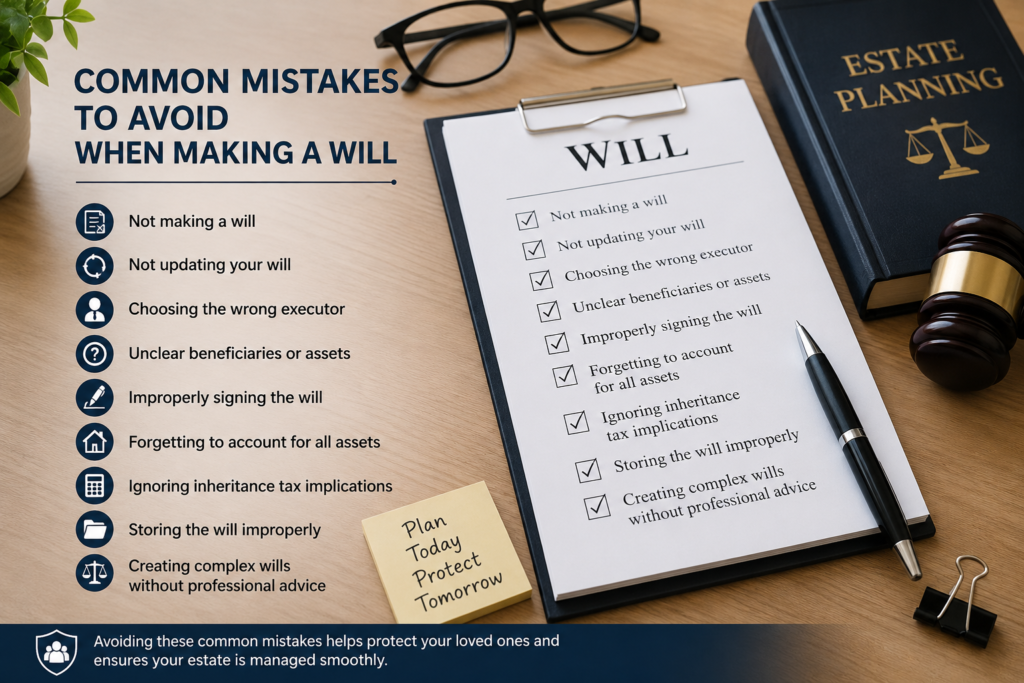
Common Mistakes to Avoid When Making a Will
Creating a Will is one of the most important aspects of estate planning. A well-prepared Will ensures that your assets are distributed according to your wishes and helps reduce the burden on your loved ones after your death. However, many people make avoidable mistakes that can lead to legal complications, family disputes, and delays in administering an estate.
Failing to Make a Will
One of the most significant mistakes is not creating a Will at all. If you die without a valid Will, your estate will be distributed according to intestacy laws. This means the law determines who inherits your assets, regardless of your personal wishes. As a result, family members or loved ones you intended to benefit may receive little or nothing from your estate.
Not Updating Your Will
A Will should be reviewed regularly to ensure it reflects your current circumstances.
Major life events that may require updates include:
- Marriage or civil partnership
- Divorce or separation
- The birth or adoption of children
- Purchasing property
- Significant changes in financial circumstances
Failing to update your Will can result in outdated instructions that no longer reflect your intentions.
Choosing the Wrong Executor
Your executor is responsible for administering your estate and ensuring your wishes are carried out correctly.
Choosing someone who is:
- Unreliable
- Unwilling to act
- Lacking organisational skills
- Unable to manage complex responsibilities
can lead to delays, administrative problems, and potential disputes among beneficiaries.
Selecting a trustworthy and capable executor is essential.
Using Unclear Language
Ambiguous or vague wording can create uncertainty about your intentions.
For example, failing to clearly identify:
- Beneficiaries
- Specific gifts
- Property or assets
may lead to disagreements over who should inherit certain items.
Clear and precise language helps minimise the risk of future disputes.
Improper Signing and Witnessing
A Will must comply with strict legal requirements to be valid.
If it is not properly:
- Signed
- Witnessed
- Executed according to legal formalities
the document may be challenged or declared invalid.
Even minor errors during the signing process can have serious consequences.
Forgetting Certain Assets
Many people focus on major assets while overlooking other valuable possessions.
When preparing a Will, consider all aspects of your estate, including:
- Property and land
- Bank accounts
- Investments
- Business interests
- Personal belongings
- Digital assets
Failing to account for certain assets can create confusion and complicate estate administration.
Ignoring Inheritance Tax Planning
Some individuals do not consider the potential inheritance tax implications of their estate.
Proper estate planning may help:
- Reduce tax liabilities
- Preserve more wealth for beneficiaries
- Improve the overall efficiency of estate distribution
Professional advice can help identify available planning opportunities.
Storing Your Will Incorrectly
A professionally drafted Will is of little use if it cannot be located when needed.
Common problems include:
- Losing the original document
- Storing it in an inaccessible location
- Failing to inform family members where it is kept
Keeping your Will in a secure yet accessible place can prevent unnecessary delays and legal difficulties after your death.
Attempting Complex Planning Without Professional Advice
While simple Wills may appear straightforward, estate planning can become complicated when significant assets, businesses, blended families, or tax considerations are involved. Attempting to prepare a complex Will without professional guidance can increase the risk of mistakes that may later result in disputes or legal challenges. A solicitor can help ensure that your Will is properly drafted, legally valid, and tailored to your individual circumstances.
Protecting Your Family and Your Wishes
A carefully prepared Will provides clarity, certainty, and peace of mind for both you and your loved ones. By avoiding common mistakes and seeking professional advice where necessary, you can help ensure that your estate is administered smoothly and that your wishes are carried out exactly as intended.