
Contesting a Will: Understanding Your Legal Rights
A will is intended to reflect a person’s final wishes regarding the distribution of their estate. However, there are circumstances where the validity or fairness of a will may be questioned.Contesting a will is a legal process that allows certain individuals to challenge the document if there are legitimate grounds to do so.Understanding the most common reasons for contesting a will can help beneficiaries and family members protect their legal interests.
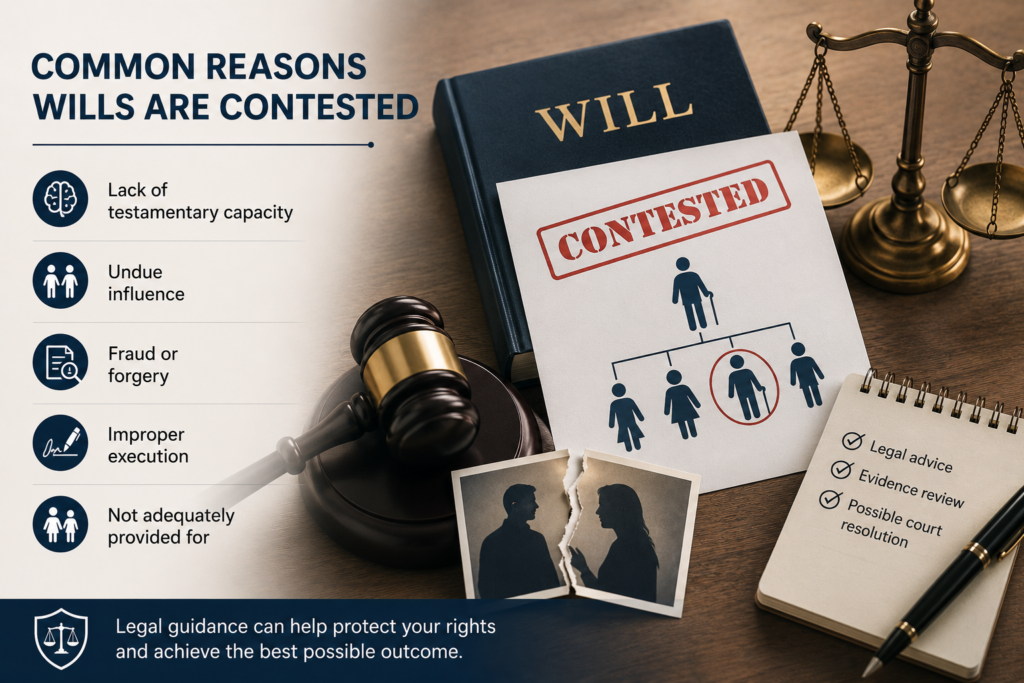
Grounds for Contesting a Will
There are several legal reasons why a will may be challenged.
Lack of Testamentary Capacity
A person creating a will must understand the nature and effect of the document they are signing.
A challenge may arise if it is believed that the individual lacked the necessary mental capacity due to:
- Dementia
- Serious illness
- Cognitive impairment
- Other conditions affecting decision-making abilities
If the person did not fully understand their actions at the time the will was made, the document may be declared invalid.
Undue Influence
Undue influence occurs when someone exerts pressure, coercion, or manipulation over the person making the will. This may result in provisions that do not genuinely reflect the individual’s wishes. Where evidence of undue influence exists, the court may set aside the will or relevant parts of it.
Fraud or Forgery
A will may also be challenged if there is evidence that it was created dishonestly.
Examples include:
- Forged signatures
- Altered documents
- False information used to create the will
- Deliberate deception during the preparation process
Fraud and forgery are serious allegations that can lead to the will being declared invalid.
Improper Execution
For a will to be legally valid, it must comply with specific legal requirements.
These requirements generally include:
- Proper signing of the document
- Correct witnessing procedures
- Compliance with applicable legal formalities
If these rules are not followed, the validity of the will may be challenged.
Inadequate Financial Provision
Certain individuals may have the right to bring a claim if they believe the will does not make reasonable financial provision for them.
This commonly applies to:
- Spouses and civil partners
- Children
- Former spouses in certain circumstances
- Financial dependants
The court may review the circumstances and determine whether additional provision should be made from the estate.
The Process of Contesting a Will
The first step is usually to seek professional legal advice. A solicitor can assess the facts of the case, review available evidence, and determine whether there are valid grounds for a challenge. In many situations, disputes can be resolved through negotiation or mediation without the need for court proceedings. However, if an agreement cannot be reached, the matter may proceed to court, where a judge will consider the evidence and decide whether the will should be upheld, amended, or declared invalid.
The Importance of Legal Advice
Will disputes can be legally complex and emotionally challenging for everyone involved. Obtaining expert legal guidance at an early stage can help protect your interests, clarify your options, and ensure that any claim is handled effectively. Professional support can also increase the likelihood of achieving a fair and practical resolution while minimising unnecessary conflict between family members and beneficiaries.